
Game info
Physics driving, Hill climbing, Arcade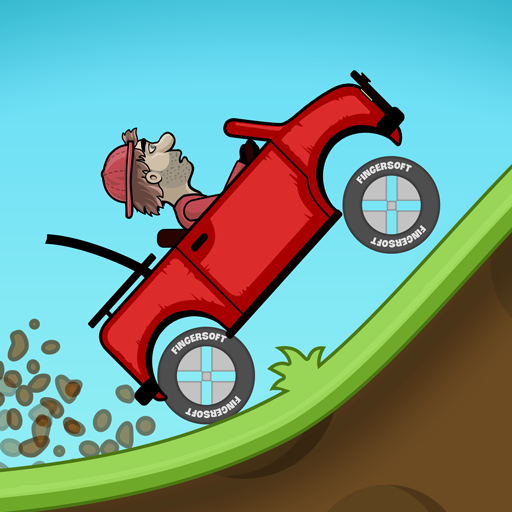
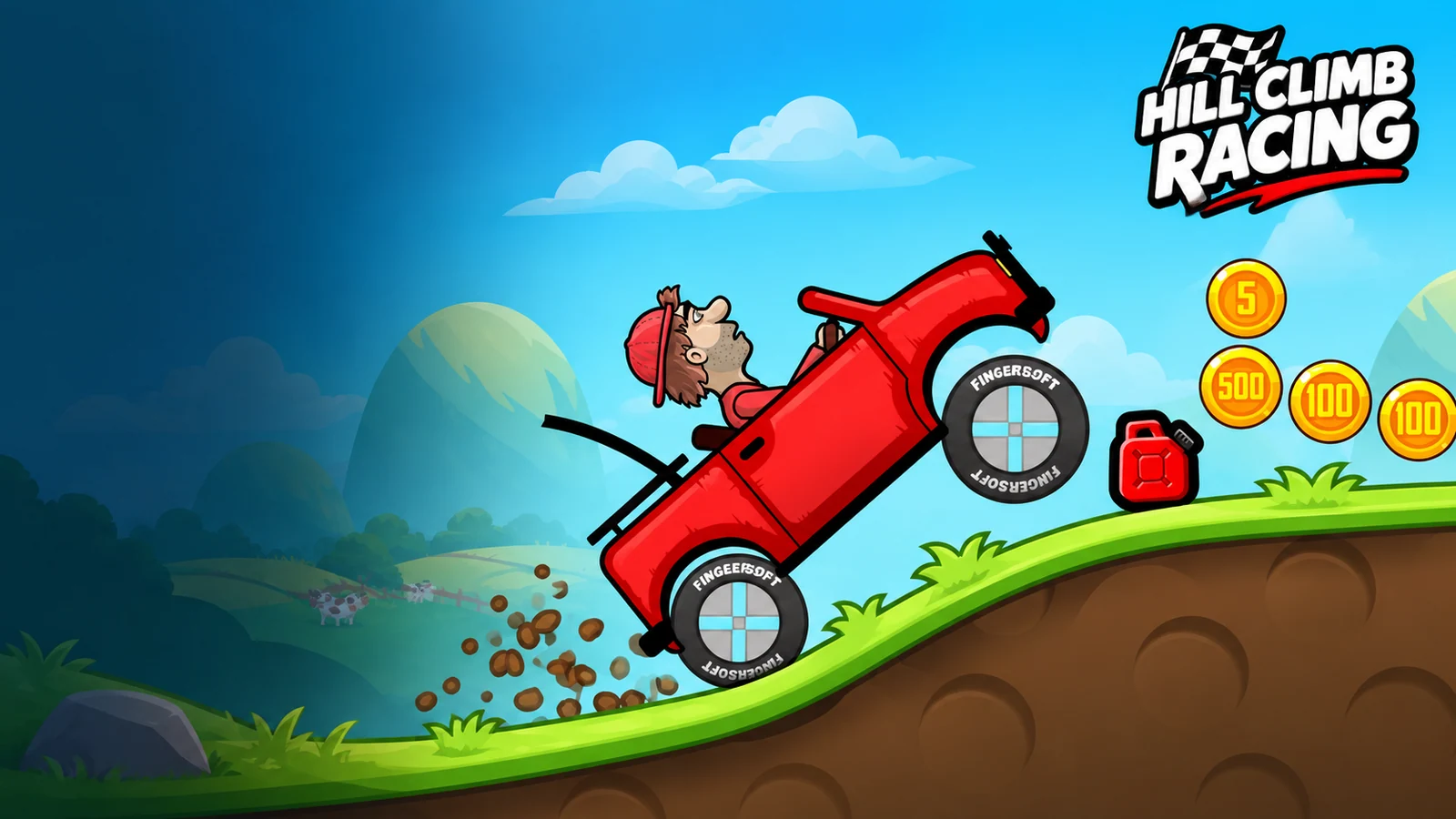
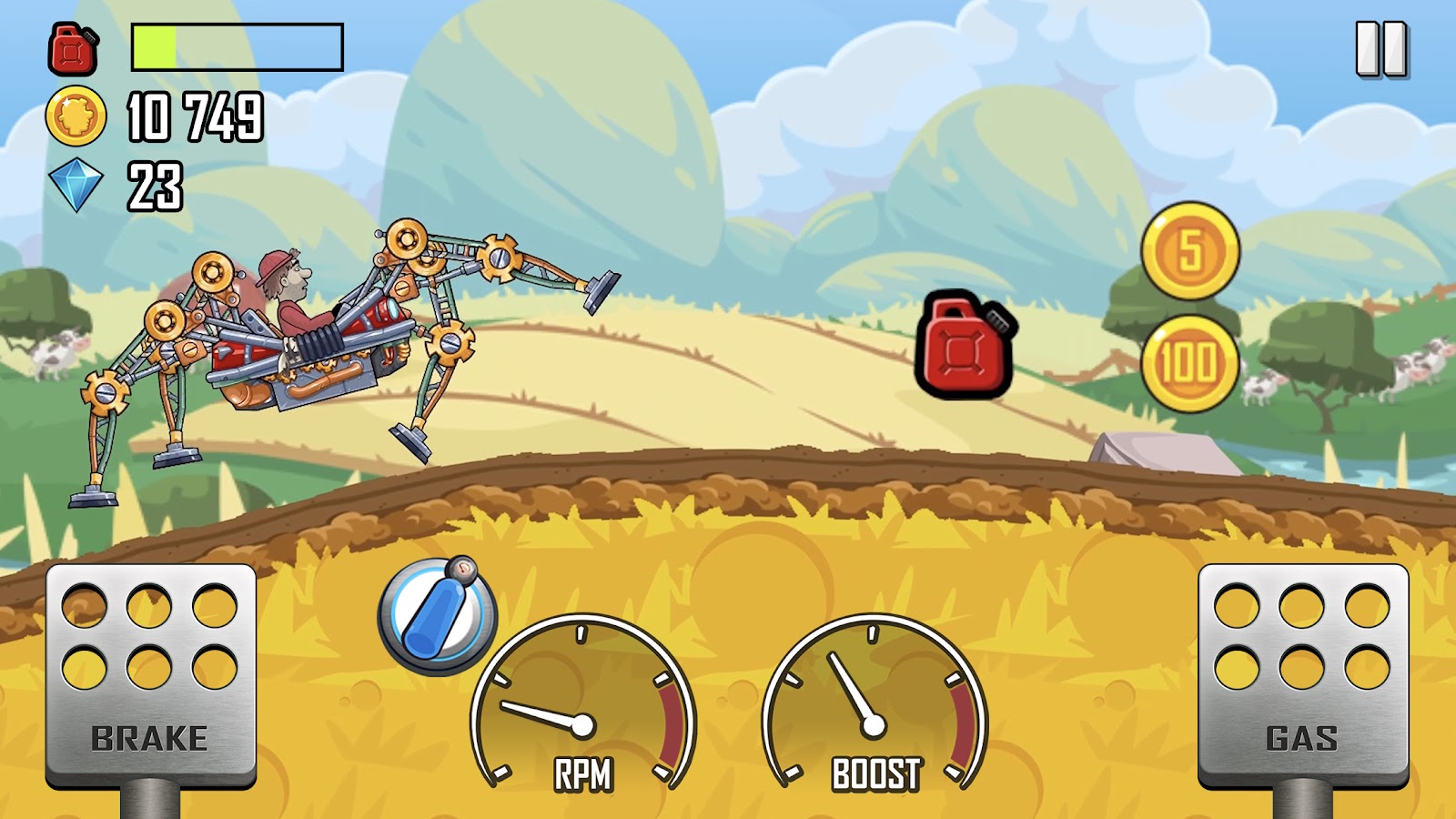
Hill Climb Racing is a side-view driving game in which maintaining balance is as important as moving forward. Uneven ground, fuel management and the vehicle’s pitch turn a simple pair of pedals into a continuous judgement problem.
About Hill Climb Racing
Hill Climb Racing is a side-view driving game in which maintaining balance is as important as moving forward. Uneven ground, fuel management and the vehicle’s pitch turn a simple pair of pedals into a continuous judgement problem.

Gameplay overview
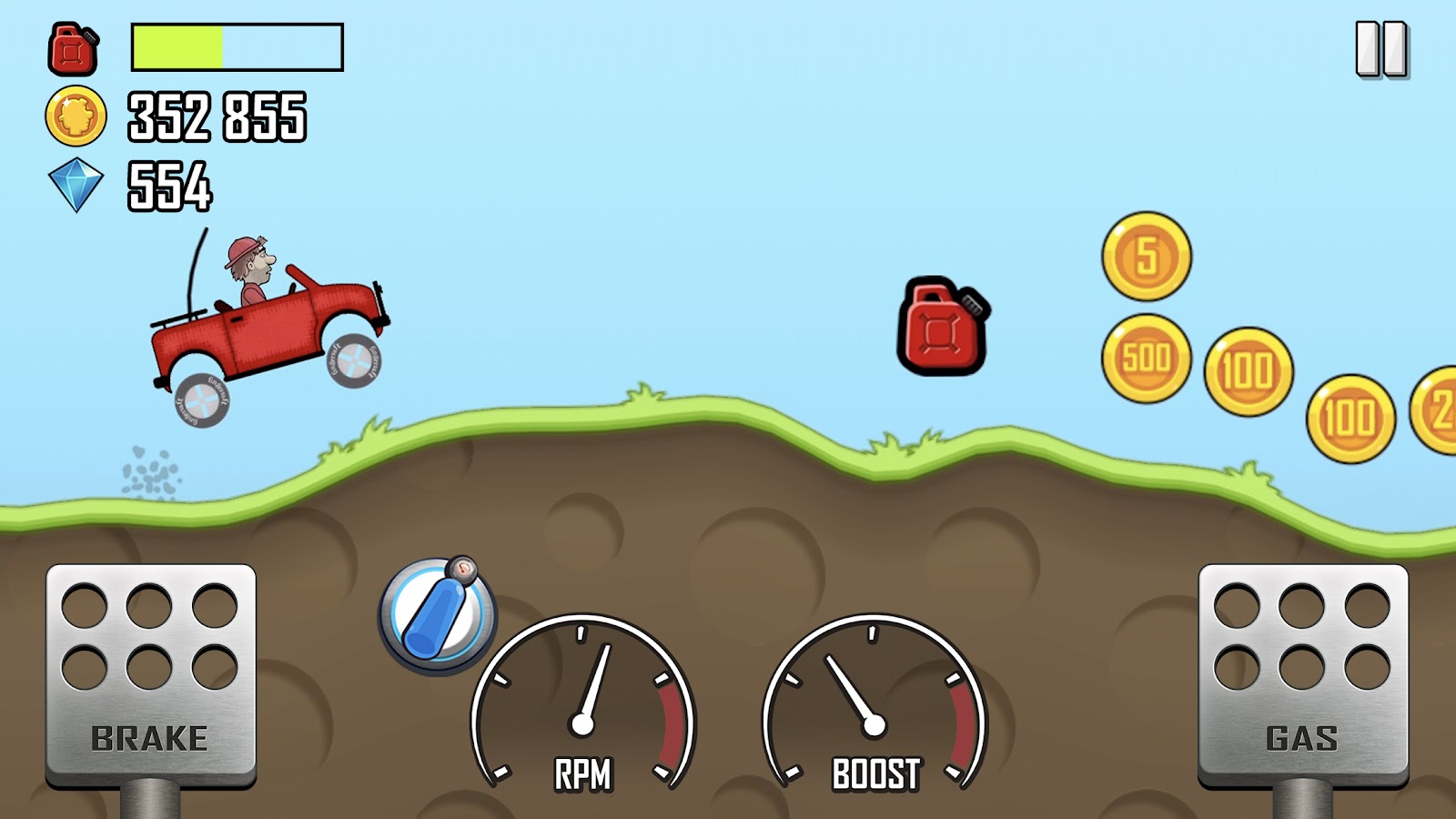
Use accelerator and brake to move across hills, collect fuel and keep the vehicle from flipping. The vehicle’s angle changes in the air as well as on the ground. An apparently fast run can end quickly if the next landing is too steep.
How to Play
Use short pedal inputs near a crest instead of holding full acceleration until take-off. Judge the slope where the wheels will land and adjust the vehicle’s pitch before contact. Watch fuel as part of the route: reaching the next can safely is often more valuable than attempting an optional trick.
Controls
accelerator and brake pedals. Browser alternatives: typically left/right or A/D, with exact controls attached to each build.
Pro Tips
- Control the take-off before correcting the landing.
- Keep the wheels aligned with the approaching slope.
- Plan fuel collection along a safe line.
- Distinguish the original from Hill Climb Racing 2 and Lite.
Making Better Decisions
Think about the vehicle’s angle before the wheels leave the ground. A crest taken at full speed can create a rotation that is difficult to correct later, even if the jump itself clears the gap. Use a short input to shape take-off, watch the approaching slope and aim to meet it with a controllable landing. Fuel is part of that route plan, not an unrelated collectible to notice at the last moment. Compare how a vehicle behaves on a familiar stretch before spending resources across several upgrades. Different vehicles and versions can change the balance of speed, traction and stability. Advice for a realistic 3D off-road simulator is only a broad alternative to a side-view physics game, and the collection should identify that difference.
Features, Modes and Progression
Fingersoft documents the original, sequels and a browser Lite edition.
Balance the approach and the crest
A hill changes both the vehicle’s angle and the amount of room available afterwards. Read the slope ahead before deciding how much speed to carry. A fast approach can solve the climb while making the landing awkward. Compare the vehicle’s position at the crest with what happens next, and use that observation to adjust one part of the attempt. Smooth control can be more useful than keeping the same input pressed throughout the route.
Choose an upgrade you can evaluate
Read the current vehicle information before spending resources. Test the changed vehicle on a section you recognise so that the effect is easier to notice. If the run ends in the same place, consider whether the problem is still the approach or balance rather than a lack of upgrades. Changing everything at once makes the useful improvement harder to identify.
Bill's journey through Climb Canyon
The original Hill Climb Racing introduces Bill and a journey through Climb Canyon, using deliberately playful vehicle physics as the challenge. Hills are not merely scenery. Their slopes affect the vehicle's angle, how it leaves the ground and where the wheels arrive. A successful climb therefore depends on more than maintaining maximum acceleration.
Coins and fuel create different reasons to read the route. Coins support development, while reaching fuel keeps the current run practical. A collection detour can be a poor trade if it leaves the vehicle unable to reach the next useful point. Compare the resource with the driving position required afterwards.
Vehicles, upgrades and terrain with a different rhythm
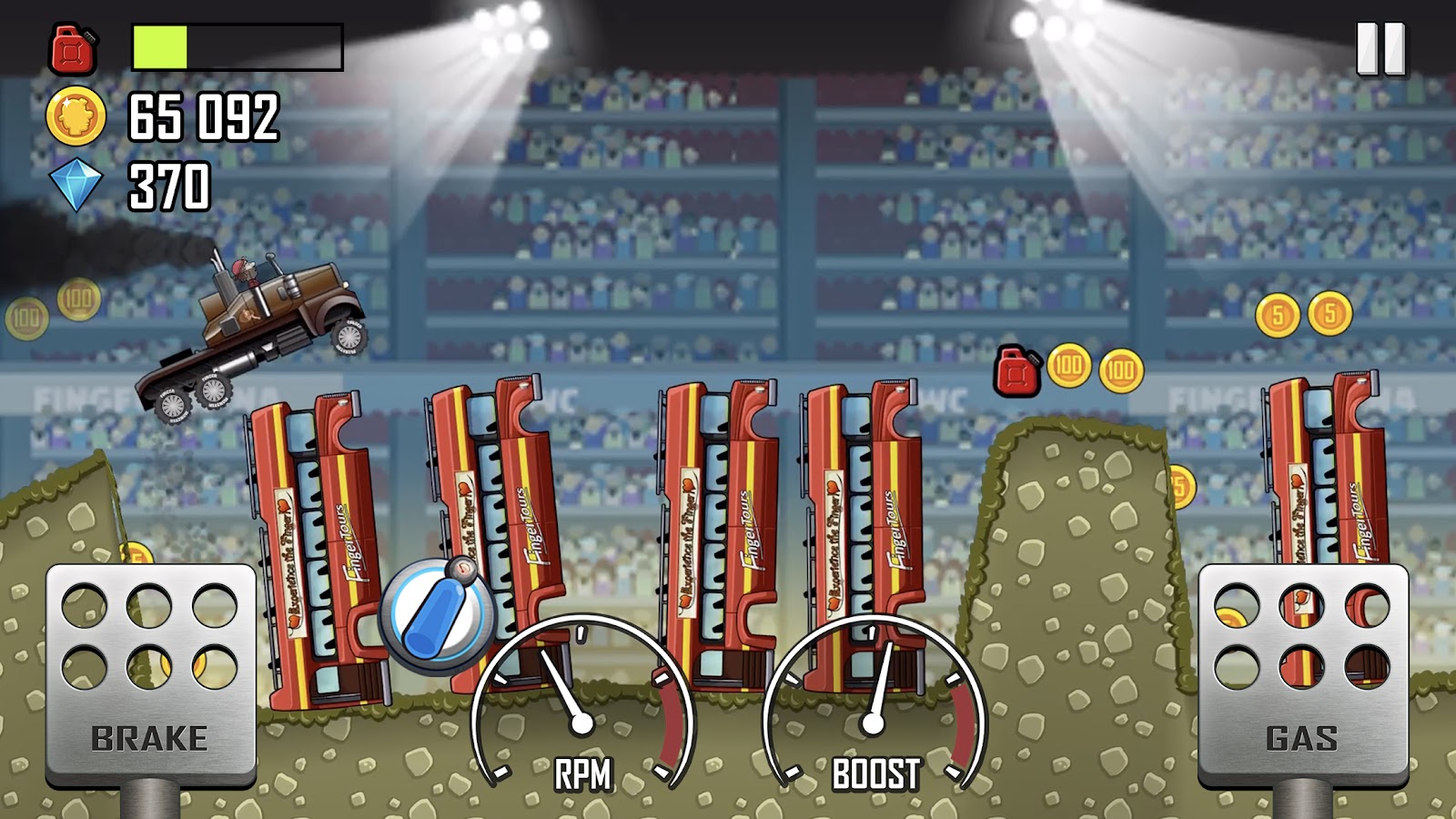
The published game describes a range of vehicles and environments, with coins supporting upgrades. A new vehicle can change the way a familiar hill should be approached. Test the response on terrain you know before expecting the same throttle rhythm to work unchanged everywhere. Equipment progression and driving control should support each other.
Tricks and longer distances provide ways to assess a run, but the first useful improvement may be a controlled landing at one recurring hill. Watch the approach and the balance at contact with the ground. A shorter jump can be more valuable than a spectacular flight if it leaves the next section manageable. That is the distinctive Hill Climb Racing balance between a humorous vehicle, a simple set of controls and terrain that keeps asking a different question about momentum.
Throttle is also a balance decision
Hill Climb Racing uses a side view to make the vehicle's angle part of the driving problem. Acceleration is not simply a command to go faster; it affects how the vehicle approaches a slope, leaves the ground and lands. Read the shape of the next hill before holding the throttle continuously. A little control before the crest can be more useful than a large correction while airborne.
Use a familiar stretch to notice how the vehicle responds to throttle and brake. Compare the approach to a gentle slope with the approach to a sharper one. The right input depends on the terrain and the current vehicle. Learning that response gives you a practical reference when a later section becomes less forgiving.
Plan the landing before leaving the hill
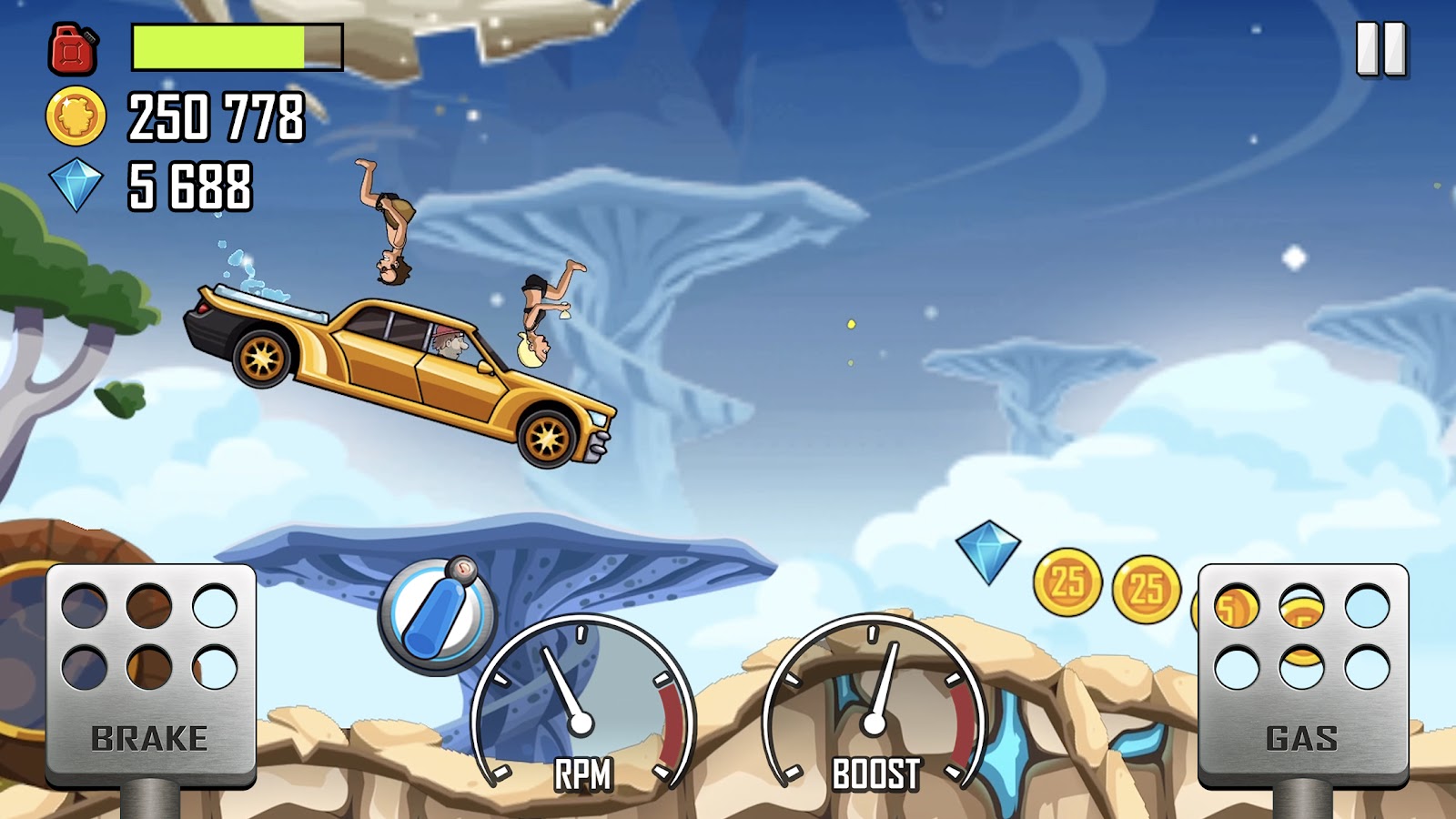
A jump can look successful while the vehicle is still in the air. The important result is the angle and position at contact with the ground. Watch the surface where the wheels will arrive and leave room to regain control before the next rise. A longer jump is not automatically a better jump if it creates an awkward landing.
After a rollover, identify where the angle became difficult. The decisive input may have happened before take-off rather than at the final moment. Try changing the approach speed or the balance correction separately. That makes each attempt answer a clearer question than repeatedly applying both controls in a hurry.
Fuel and the route through a stage
Fuel makes forward progress a practical objective. Watch the available supply and the next reachable pickup while still reading the terrain. A route that looks attractive for coins may be unhelpful if it makes reaching fuel more difficult. Compare the reward with the distance and control needed to continue the run.
If the vehicle repeatedly runs out near the same section, inspect the earlier pace and the path taken. If it reaches the area quickly but overturns, the problem is different. Separate progress, collection and balance when reviewing the result. Each can be improved without assuming the same upgrade or input solves them all.
Upgrades need a familiar test route
Vehicle upgrades can change how a known section feels. Test one change on terrain you already understand so the difference is visible. A better engine, traction or other displayed improvement can still ask for a different approach to a jump. The equipment and the driving routine should be learned together.
Do not judge an upgrade only by whether the very next attempt sets a record. Compare a specific part of the route: climbing the same hill, maintaining control after a crest or reaching the next fuel point. Those observations help explain what the purchase actually improved and where driving decisions still matter.
Original Hill Climb Racing and the next driving challenge
Fingersoft's Hill Climb Racing page identifies the original game and official product information. The store buttons below lead to published listings. Hill Climb Racing and its sequels have related names but different content and systems, so use the current release for vehicle and stage details.
Related side-view driving games offer different vehicles and terrain. A stunt game may reward a risky flight, while a distance game may place more value on a controlled landing. Hill Climb Racing is most satisfying when a hill becomes something you can read: choose the approach, manage the angle and arrive with enough control to keep going.
Worked example: reaching an obstacle without room to correct
Suppose the vehicle approaches a difficult section quickly enough to reach it but leaves little time for the next steering or balance decision. The final collision or rollover is only the last visible event. Compare an earlier adjustment in pace or position. Preserving control before the obstacle may be more useful than trying a larger correction after the route has already become restrictive.
Test that change on familiar ground. Notice the position after the difficult section, not only whether the vehicle passed its first edge. A route is more dependable when it leaves a usable next step. Keep terrain, traffic and the selected game's actual objective in view rather than treating every visible reward as the immediate priority.
Worked example: a stronger vehicle with the same old approach
An equipment change can alter acceleration or handling while leaving a repeated decision mistake unchanged. Use the same section to compare the effect of an upgrade. Did the vehicle reach a better position, respond differently or simply arrive at the old problem sooner? Those observations explain more than expecting the next run to produce a record automatically.
When trying another vehicle, give its controls time to become familiar. The menu's specifications do not replace learning how the current route feels. Changing equipment and the entire route simultaneously makes the result difficult to compare. A small controlled test gives the progression choice a practical meaning.
Set up the controls before the demanding section
Confirm steering, acceleration, braking and any other actions in the current player. Touch layouts, tilt input and keyboard controls are not interchangeable assumptions. Use a comfortable view where the upcoming road or terrain remains visible. If a run fails, distinguish an unfamiliar input from an approach that left too little room. Each needs a different correction, and identifying the difference lets a short practice session improve something more specific than the final distance or score.
Related games
Frequently asked questions
Why does the car flip after a hill?
Too much pitch or a landing that does not match the slope can overturn the vehicle.
Is Hill Climb Racing Lite the same as a portal sequel?
No identity is assumed; Fingersoft’s official Lite route and other portal titles are recorded separately.
Who develops or publishes Hill Climb Racing?
Fingersoft
Which controls should I use?
Native: accelerator and brake pedals. Browser alternatives: typically left/right or A/D, with exact controls attached to each build.
Is it free?
The observed Google Play listing is free to download and offers in-app purchases. A browser alternative has its own provider terms and may include adverts.
Can I use my official account or saved progress in a browser alternative?
No account, purchase or save transfer is established unless the developer explicitly documents it for that build.
What games should I try next?
Compare Hill Climb Racing, hill driving, physics car, uphill racing. The related list prioritises shared mechanics and preserves each game’s real identity.
Good game? Tell us.0
Share a tip, celebrate a high score, or tell us what you think. Keep it friendly.